
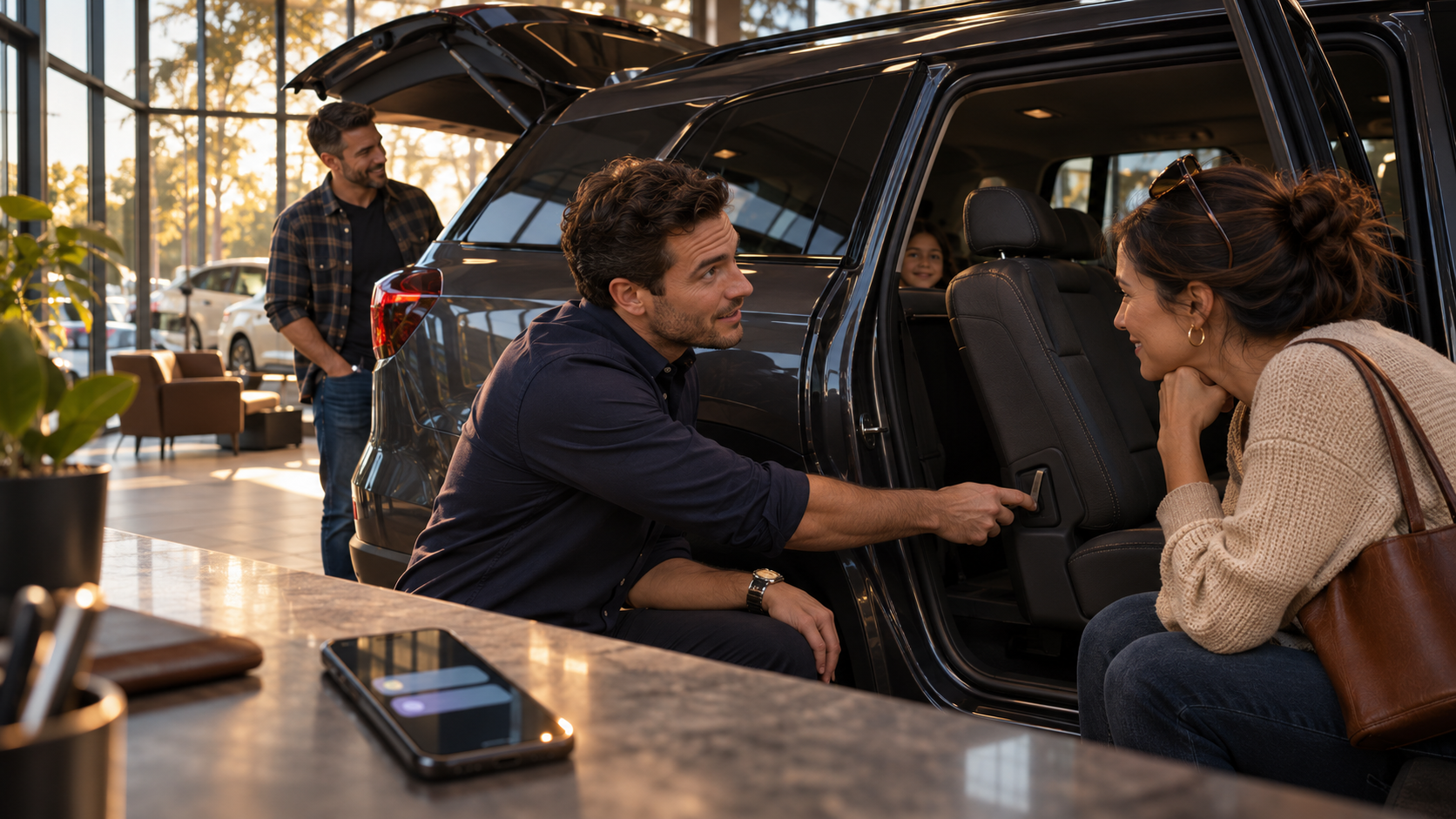
At 2:14 pm on a Saturday afternoon, Alex is standing beside an SUV with a family of four. The kids have claimed the third row. Dad is checking the cargo space. Mom asks the question that might decide the sale.
“Can I get to the back seats without taking out the car seat?”
As Alex reaches for the seat release, his phone vibrates.
“Does the white one have captain’s chairs?”
An email comes in about a truck. Is it still available? What’s the advertised price? Inside, someone calls asking for Alex. A new lead lands in the CRM. His manager needs an update on an appointment.
Alex puts his phone away and gives the family his full attention. He’s doing exactly what I’d want him to do. Across town, the shopper who asked about the white SUV is still holding her phone. Another dealership is one message away.
You can’t coach more hours into Saturday
After more than a decade in automotive retail, I’ve seen how quickly a busy Saturday stretches a good team. Two people call out. A new hire is still learning the inventory. Your strongest salesperson is working a deal, helping a colleague and trying to remember who asked for a callback before leaving home.
A manager can remind the team to answer leads faster. At 2:14 pm, someone still has to finish the demonstration, check the equipment on the white SUV and get the truck shopper an answer. The customer waiting at home sees none of that. She knows she asked a question that should be easy to answer.
That’s where AI can earn its place in a dealership.
Answer what you can. Put the rest in someone’s hands.
Picture what Alex could come back to after the demonstration.
- White SUV. Captain’s chairs verified. The customer wants to visit today and asked for a call before leaving home. Alex has the callback.
- Truck. The store shared the advertised price and availability from its connected inventory. The customer asked for an out-the-door quote. The sales manager has the request and the conversation.
- Afternoon appointment. The customer confirmed and asked to have the vehicle ready. The team can see the request before the customer arrives.
Getting there takes more than firing off a quick reply. If the vehicle record doesn’t confirm captain’s chairs, the assistant should ask the team to verify the equipment. If the customer wants an out-the-door quote, a monthly payment or an interest rate, the request should reach the salesperson, desk manager or finance professional who can handle it.
By the time Alex is free, he can make the call that might bring a customer into the store that afternoon.
Then she calls
The shopper who texted about the white SUV picks up the phone. Whoever answers has a chance to say something simple.
“I see you were asking about the white SUV with captain’s chairs. Are you still hoping to come in today?”
That’s a better start than asking her which vehicle she means. She’s already told us what she wants, why the seating matters and when she might come in. The store should be able to use what she shared, even when the channel or the person changes.
In the first AI on the Lot, I wrote about the dealership’s memory problem. Here’s what that memory is worth on a Saturday. A salesperson knows which callback to make first. The desk knows who’s waiting for a quote. The business development center knows the appointment is already confirmed and can help get the vehicle ready. Read Part 1, The Dealership Memory Problem
That’s why we’re building Dealer Velocity IQ around Velocity Brain. We’re designing it to connect messages, emails, calls, appointments and staff updates in one customer timeline that the right people can access. A CRM alert that says “Customer replied” tells Alex to open a thread. A briefing that says “Vehicle meets her needs. Wants to visit today. Call before she leaves home” tells him why to pick up the phone.
Give the customer a reason to reply
By the fourth “Just checking in,” we’ve established that the dealership is excellent at checking in. We may still have given the customer no reason to reply.
If she wanted a white SUV with captain’s chairs and one arrives, now there’s something worth telling her. If she asked to hear from us next month, that should guide when we reach out. If she asks us to stop, we stop.
The same idea applies after the sale. A lease approaching maturity or a previous buyer who asked about upgrading can give a salesperson a reason to reconnect. Reliable records can surface the opportunity. The salesperson can confirm what’s true today and decide how to approach the conversation.
A missed call needs an owner
While Alex is on the lot, someone is calling service. Someone else is asking for him by name. Both deserve a clear next step.
We’re building an AI voice assistant that identifies itself and brings in a person when asked. With a connected scheduling system, it could check for an available service slot, book an authorized time and confirm it. If the appointment still needs someone’s approval, the caller should hear that clearly. If Alex is unavailable, the assistant can capture why the customer called and put the callback on the customer’s timeline, with an owner and a visible status.
For a store without a dedicated BDC, that gives salespeople coverage while they’re with customers. For a store with one, it gives the team more context for each call and a better sense of what needs attention first. And when a salesperson leaves, the next person can pick up the commitments the store has already made.
Back on the lot
By 4:30, Alex is free. In the experience we’re building, the truck quote is with the desk, the service appointment is on the calendar and Alex knows which customer asked for a call before she gets in the car.
That’s what we’re working toward with Velocity Engage and Velocity Brain. Engage is being built to help the dealership respond across text, email and phone, with people overseeing customer communications. Velocity Brain carries what the store learns into the next interaction. Velocity Engage · Velocity Brain
The family in front of Alex deserved his full attention. So did the customer trying to reach him. A dealership should be equipped to take care of both.
One Customer. One Timeline. One Brain.
Next in AI on the Lot: The customer has arrived. How much of their story arrived with them?